 Essay

(1966) – reporter, newspaper journalist (formerly also TV and radio journalist), lecturer. Mariusz Szczgieł is a graduate of the Faculty of Journalism and Political…
View profile
(b. 1944) – a prose writer, essayist, journalist, columnist and authority on the Napoleonic era.
A graduate of the Architecture Faculty of the Warsaw University of Technology, he also finished Art History at the University of Rome and a UNESCO monument conservation course. In 1977, he received a PhD from the Architecture Faculty of the Warsaw University of Technology, with a thesis titled Napoleon the Fortification Builder.
He began his journalistic career in 1969, writing articles for Myśl Społeczna, Architektura, Perspektywy and Stolica (1976–81). In the 1980s, he occasionally appeared in the press. In 1993, he began writing a column for Najwyższy Czas!, and also wrote for Gazeta Polska, Niezależna Gazeta Polska and Tygodnik Solidarność. In 2011 he began collaborating with Uważam Rze, and two years later, formed ties with Do Rzeczy, where he publishes to this day.
As a prose writer, he debuted in 1972, publishing seafaring novellas in Morze magazine. His book debut came in 1974 with the novel ‘Kolebka’ (The Cradle), awarded three years earlier in a literary competition announced for the fiftieth anniversary of the Polish Writers’ Union and twenty-fifth anniversary of communist Poland. Łysiak’s book debut was a historical novel from the Napoleonic era. While taking up a historical subject, Łysiak made critical allusions to the communist system.
The following books in the writer’s oeuvre offer a variety of poetics and themes. There were more Napoleonic works (‘Szuańska ballada’ [A Chouan Ballad], ‘Cesarski poker’ [The Emperor’s Poker], ‘Empirowy pasjans’ [Imperial Solitaire]), books that blend essay and reportage and delve into art history, the fruits of his foreign trips, in part to the USA, France and Italy (‘Wyspy zaczarowane’ [Enchanted islands], ‘Asfaltowy saloon’ [The Asphalt Saloon], ‘Francuska ścieżka’ [The French Path]). In Łysiak’s oeuvre there are epics (novels, tales) that cover historical, detective, thriller, drama, adventure and fantasy genres. He wrote a heroic-picaresque trilogy (‘Dobry’ [Good], ‘Konkwista’ [The Conquistador], ‘Najlepszy’ [The Best]), whose action takes place in the criminal underworld of Warsaw’s Praga district. He spins plots taking place in imaginary worlds, blending realism and phantasmagoria (‘Statek’ [The Ship], ‘Flet z mandragory’ [The Mandrake Flute], ‘Szachista’ [The Chess Player]), some under the pseudonym Valdemar Baldhead (a collection of novels, Perfidia, and the first edition of Conquistador). He has also written a drama ‘Cena’ (The Price) and a historical novel set in Ancient Rome, ‘Ostatnia kohorta’ (The Last Cohort). His prose has been critiqued for its formulaic plots, the cruelty of the events depicted, and the overstated viewpoints. For others, these are assets – in Łysiak’s works the line between good and evil is clear, the author does not relativise anything, he creates vivid heroes who speak unequivocally about the moral structure of the world. Łysiak’s epics adopt the swashbuckling poetic of Aleksander Dumas and the fantastical horror of Edgar Allan Poe. Yet critics have said his relationship to the historical plot is closer to Marian Brandys and Stanisław Cat-Mackiewicz.
Alongside his epics, Łysiak writes non-fiction and journalism. Between 1997 and 2000, he released an eight-volume publication on art history (‘Malarstwo białego człowieka’ [White Man’s Painting]). In 2012–13, he published the two-volume ‘Malarstwo biało-czerwone’ (Red-and-White Painting). In 2003–4, he released pieces on bibliophilia (Empireum). Beginning in 1988, he published anthologies of his columns in the ‘Łysiak in the Papers’ series. The final, eighth volume came out in 2019. He also has written journalism on politics and society (‘Stulecie kłamców’ [Century of Liars], ‘Rzeczpospolita kłamców. Salon’ [Republic of Liars: The Salon], ‘Alfabet szulerów’ [Alphabet of Cheats], ‘Mitologia świata bez klamek’ [A Mythology of a World with Rubber Walls] and the contemporary literary scene (‘Karawan@literatury’ [Caravan@Literature]). He has written literary biographies of Prince Józef Poniatowski, Charles-Maurice de Talleyrand and the architect Frank Lloyd Wright.
He has also written radio plays for Polish Radio; in 1974 there was ‘Człowiek w żelaznej masce’ (The Man in the Iron Mask), five years later, ‘Cagliostro w Warszawie’ (Cogliostro in Warsaw), then ‘Kamienny Feniks na Monte Cassino’ (The Stone Phoenix of Monte Cassino) and ‘Operacja „Czarny Orzeł”’ (Operation “Black Eagle”). He and Mieczysław Waśkowski collaborated on a television series based on Wacław Gąsiorowski’s ‘Huragan’ (The Hurricane). In 1984, Polish Television broadcast TV Theatre based on motifs from Łysiak’s prose: ‘Selekcja’ (The Selection) and Bestseller.
In 2000, he was called ‘Man of the Year’ by Tygodnik Solidarność. His Republic of Liars was nominated for the Józef Mackiewicz Award in 2005.
fiction:
essays, journalism:
Croatian:
Czech:
French:
German
Hungarian:
Italian:
Spanish:
(1966) – reporter, newspaper journalist (formerly also TV and radio journalist), lecturer. Mariusz Szczgieł is a graduate of the Faculty of Journalism and Political…
View profile
(b. 1967) – a poet and journalist; in the 1980s and 90s tied to brulion magazine. He debuted in 1992 with the ‘Z wysokości’ (From the Heights) collection.…
View profile
(b. 1980) – a prose writer, photographer and the son of documentary filmmaker Marcel Łoziński. He made his literary debut with ‘Płacz Watermana’ (‘Waterman’s…
View profile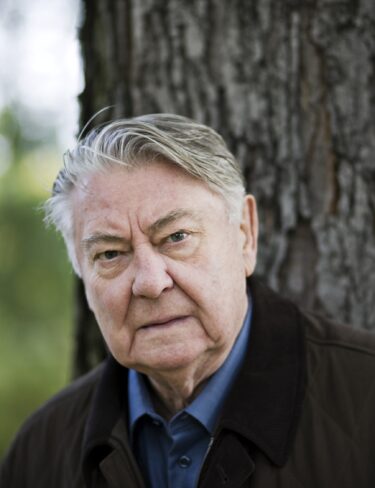
(1930–2016) – a writer, author of radio plays and journalist He made his prose debut in 1951 on the radio with a fragment of…
View profile
(b. 1983) – a prose writer, dramaturg and creator of radio plays. He is a dramaturgy graduate at the Theatre Directing Faculty at the…
View profile
(1938–2024) – a prose writer, playwright, essayist and literary translator, son of Catholic activist and journalist Konstanty Łubieński. He made his debut as a…
View profile
