 Drama

(b. 1978) – a poet and musician. For many years he has lived in Żurada, near Olkusz, where he works as a Polish teacher…
View profile
Samples
The Book Institute offers translations of excerpts from Lidia Amejko’s works in the following languages: French, German and Russian. Interested parties are kindly invited to contact us.
(b. 1955) – playwright, prose writer, audio drama writer.
Amejko wrote her first audio dramas in the 1970s; these included “Gdy rozum śpi – włącza się automatyczna sekretarka. Rzecz o gadaniu” (When Reason Sleeps, the Answerphone Picks Up. A Piece About Chatter), not published until 1993 in “Dialog”. She debuted as a prose writer in the monthly magazine “Odra” in 1987, with the short story “Misja Oscara Llenor” (Oscar Llenor’s Mission), which she presented as a long-lost piece by Jorge Luis Borges and signed as a translator (L. A. Surowska). “Dialog” published many of her texts, including “Męka Pańska w butelce” (The Passion in a Bottle, 1995), “Dwadrzewko” (1996) or “Farrago” (1997). Her writing is often set in a liminal space: Farrago, for example, tells the story of an action movie star who goes to the beyond after a deadly car accident, and when he returns to Earth, his own emotions are replaced by those of the characters he used to play. “Przemiana 1999” (Metamorphosis 1999) is a variation on Franz Kafka’s famous story, set in the world of high finance. There’s a note of mockery in Amejko’s writing, detectable in the witty dialogues and the colloquial, often even crude language. This mockery leads to a critical analysis of modern people’s inner lives, and an exploration of their spiritual condition. Amejko’s plays have been translated into many languages and staged at many theatres abroad (including England, Germany, Austria, the Czech Republic and Croatia) and in Poland (also in Teatr Telewizji), while her audio dramas were broadcast on Polish national radio. Amejko is also the co-author, with M. Czub, of plays for children, for example “Alchemik” (The Alchemist), “Gołębiożercy” (The Pigeon Devourers) and “Klątwa Muchomora” (The Curse of the Death Cap Mushroom), staged at the Wrocław Puppet Theatre.
Her prose book debut was the 2003 short story collection “Głośne historie” (Loud Stories, 2003), nominated for and awarded many prizes. She later published the novel “Żywoty świętych osiedlowych” (The Lives of Housing Estate Saints, 2007), and based the audio drama “Osiedle” (The Estate) on that second book. These works also feature the trademarks of her oeuvre. The characters in Loud Stories live somewhere in the borderlands of different timelines and ontologically disparate spaces. They are seemingly normal, not to say banal, and this impression is reinforced by the chatty narration. But their problems are not trite at all; the characters try to control the chaos of existence, find some stable footholds in it. The Lives of Housing Estate Saints harks back to an old literary model, the hagiography (Amejko likes to use stylization or pastiche, various intertextual strategies; after all her debut, in the monthly “Odra”, was a short story presented as an unknown Borges text). She sets the novel in a modern housing estate, but a very unusual one. Or rather – its residents are unusual, as are the things that happen to them. The characters include Józef Drukarz – “holemaker of meaning”, Chajdeger – “Benefactor of Homeless Words”, Kunerta – “The Gravediggeress of Dreams”. They find it completely normal that real saints live right next to them, and God sends them chiding text messages. In both these books Amejko attempts to answer questions fundamental to modern humans, her discourse at the intersection of sociology, psychology and religion.
She was nominated for the Nike Literary Award for both these books (in 2004 and 2008, respectively). Loud Stories was also nominated for the Diamonds of the Year Award in 2003, and The Lives of Housing Estate Saints won the Fredro’s Quill Award in 2007, the Hermenegilda Kociubińska Prize awarded by the Konstanty Ildefons Gałczyński Foundation and the Polish Book Publishers’ Association Prize.
More information about Lidia Amejko’s work can be found on the author’s website: www.amejko.pl.
Bulgarian:
Czech:
French:
German:
Hungarian:
(b. 1978) – a poet and musician. For many years he has lived in Żurada, near Olkusz, where he works as a Polish teacher…
View profile
(b. 1937) – a prose writer, reporter and journalist. She is a graduate in journalism from the University of Warsaw. She has worked with…
View profile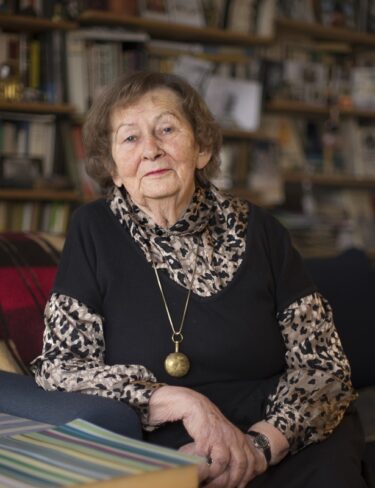
(1931–2025) – a poet, prose writer and columnist. Counted among the members of the Współczesność generation, Urszula Kozioł published in Współczesność and Tygodnik Kulturalny,…
View profile
(1975) – writer and columnist. Michał Witkowski made his debut with a critically acclaimed collection of short stories, “Copyright” (2001). The collection uses various…
View profile
(b. 1958) – a writer, poet, literary critic, historian of literature and professor of the humanities. Nasiłowska is a Polish Studies graduate from the…
View profile
(b. 1976) – a prose writer and journalist, one of Poland’s most recognised authors of pop literature. Miłoszewski made his debut with the novel ‘Domofon’…
View profile
