 Fiction

(b. 1972) – a writer, translator and literary scholar. He graduated in Polish Studies from the Jagiellonian University, taking his PhD in the Humanities…
View profile
(b. 1972) – a prose writer, journalist, co-author of computer-game and boardgame scripts.
He has worked with magazines like Gamestar, Click!, Komputer Świat i Gry, Magia i Miecz and Nowa Fantastyka. He writes a column for the Do Rzeczy weekly. His short stories have been published in such anthologies as: ‘Robimy rewolucję’ (Let’s Make a Revolution, 2000), ‘Demony’ (Demons, 2004), ‘Niech żyje Polska hura!’ Vol. 1 (Long Live Poland, Hurrah!, 2006) and ‘Idiota skończony’ (Complete Idiot, 2018).
He made his debut in 1991 in Nowa Fantastyka with a short story, ‘Czarna cytadela’ (‘The Black Citadel’); later stories appeared in Voyager. Almanach Grozy i Fantastyki, Złoty Smok and Fenix. In 1999, he published his first book, a short-story collection called ‘Opowieści z Dzikich Pól’ (Tales from the Wild Fields).
Jacek Komuda’s work concentrates on historical figures and events, mainly from the Polish-Lithuanian Commonwealth period, in its southeastern lands, which are full of dense forests, tombs, and the mysterious ruins of manors and fortresses. Paweł Dunin-Wąsowicz has called his work “borderland fantasy,” which has a fairy-tale or folkish quality. It is based on old beliefs and prophetic visions that come in dreams.
Komuda freely combines various literary genres – fantasy, horror, historical, adventure, noble tales, fairy tales, and also legends and folklore. He weaves archaisms into the modern-day language, melding facts from historical documents and his writerly imagination.
Moreover, Jacek Komuda strikes up a dialogue with Henryk Sienkiewicz and his way of depicting the Polish nobility. In Kormuda’s work, the heroes of Polish history are people with weaknesses and flaws, and the mythical Eastern borderlands, now associated with old traditions of the Polish manor and the lesser backwater nobility – a place of bloody duels, supernatural forces and indomitable power.
For his 2009 novel ‘Galeony wojny’ (Galleons of War) he received the Leonid Teliga Award, and the same year was nominated for the Jerzy Żuławski Award for ‘Diabeł Łańcucki’ (The Łańcut Devil). He also received the Guardian of Memory Statuette 2023 in the “Artist” category (the editors of Do Rzeczy appreciated his novels The Łańcut Devil and ‘Banita’ [The Outlaw] on the Sarmatian times, and Hubal, Westerplatte and Wizna from the Second World War).
His stories have been published in Russian and Ukrainian anthologies, among others (2016, 2017).
series:
Orły na Kremlu
Wrzesień 1939
Jaksa
Zawisza Czarny
Almanachy szlacheckie
Others
(b. 1972) – a writer, translator and literary scholar. He graduated in Polish Studies from the Jagiellonian University, taking his PhD in the Humanities…
View profile
(b. 1976) – novelist and columnist. Karpowicz debuted with the novel „Niehalo” (Uncool). Its plot seemingly adds up to a sociological report about the…
View profile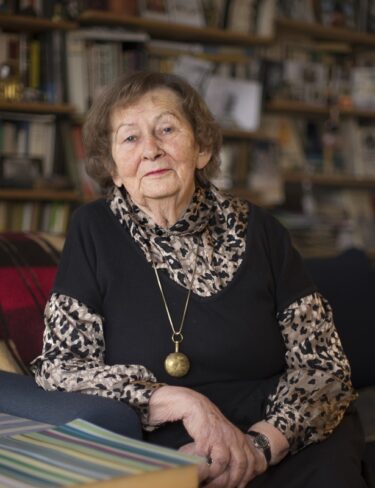
(1931–2025) – a poet, prose writer and columnist. Counted among the members of the Współczesność generation, Urszula Kozioł published in Współczesność and Tygodnik Kulturalny,…
View profile
(1935-2024) – poet, writer, lyricist, journalist, translator, film critic, diplomat Graduated in Polish studies at the University of Warsaw (defended his thesis in 1957…
View profile
(b. 1980) – a poet, curator and animator of the literary scene. An author of experimental poetry, partly akin to Concretism. His poetry works…
View profile
(b. 1998) – a poet, editor and literary critic. Kopeć’s debut volume of poetry, ‘przyjmę/oddam/wymienię:’ (I take/I give/I exchange:, 2021), as Jakub Skurtys wrote,…
View profile
